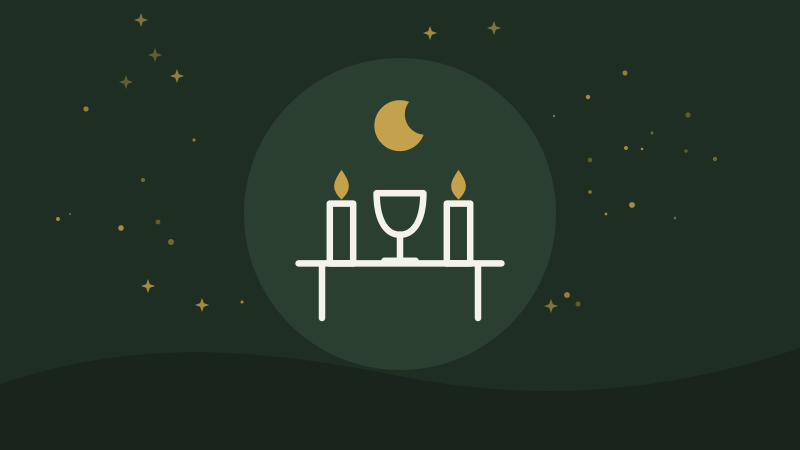
With Samhain just over a week away, the question that friends ask me most often is how to make an ancestor altar. People expect the answer to be complicated. It is not. If you have a shelf, a photograph, and a candle, you can have one finished by this evening.
Who counts as an ancestor?
More people than you might think. Tradition speaks of several kinds.
- Ancestors of blood. Your family line, known and unknown.
- Ancestors of the heart. People who were family in every way that mattered: a godparent, a teacher, a friend who died too young.
- Ancestors of place. Those who lived on your land before you, and who made the streets and fields that you walk through.
- Ancestors of craft. The people who shaped your work or your path, whether or not you ever met them.
Animals belong here too. Many of us have a much-loved dog or cat among our beloved dead.
What you need
- A photograph, or a name written on a card
- A candle in a safe holder
- A glass of fresh water
- One thing that belonged to them or reminds you of them: a watch, a recipe card, a button from a coat
- Something from the season: an apple, a few autumn leaves, a sprig of rosemary for remembrance
Putting it together
- Clear a shelf or part of one, and wipe it clean.
- Lay down a cloth if you like. White and black are both traditional.
- Set the photographs at the back, the candle in front of them, and the water to one side.
- Arrange the keepsakes and the seasonal things around them.
- Light the candle, say each name aloud, and say, "You are remembered."
That is all. The altar is made.
A bookshelf is a tight place for a flame. Leave clear space above the candle, never light it beneath another shelf, and keep the photographs, cloth, leaves, and cards well away from it. Put it out before you leave the room. A battery candle does the job just as well.
What to do there
Visit it. Change the water every few days. Light the candle when you have ten minutes to sit, and talk to them the way you would on the telephone. Tell them the news. Ask for their advice, and then be quiet for a while.
Offerings are traditional and can be very simple: a cup of the tea that she liked, a piece of the cake that he always asked for, the first slice of bread from a new loaf. Leave food for an hour or two, then compost it. Keep anything edible out of reach of pets.
When family is complicated
Not everyone has ancestors whom they wish to honor. If someone harmed you, you are under no obligation to put that person on your altar. It is your altar, and you decide who is invited.
If you were adopted, or you know little of your family, light a candle "for those whose names I do not know." They are yours all the same. And if your line holds people who did wrong, some practitioners light a candle for the healing of the line itself, which asks nothing of you but the wish.
After Samhain
You can take the altar down on the second of November, or keep it all year. Mine has shrunk to a corner of a bookshelf, with three photographs and a candle stub, and it has been there for more than a decade. I pass it twenty times a day. That is what it is for.
For more on the festival itself, see our guide to Samhain.