Paganism has no creed. Nobody will ask you to recite a list of beliefs, and two people in the same circle may understand the gods quite differently. Even so, a few ideas turn up so reliably that it is fair to call them the core of the Craft: the divine as both feminine and masculine, the world as a weaving of elements, and an ethic built on freedom and responsibility.
The guides in this section explain those ideas as they are held in Wicca, where they are most clearly set out, and note where other witches and Pagans see things differently.

The Goddess and the God in Wicca
Wiccans honor a Goddess of moon and earth and a God of sun and wild places. Here is how they are understood.
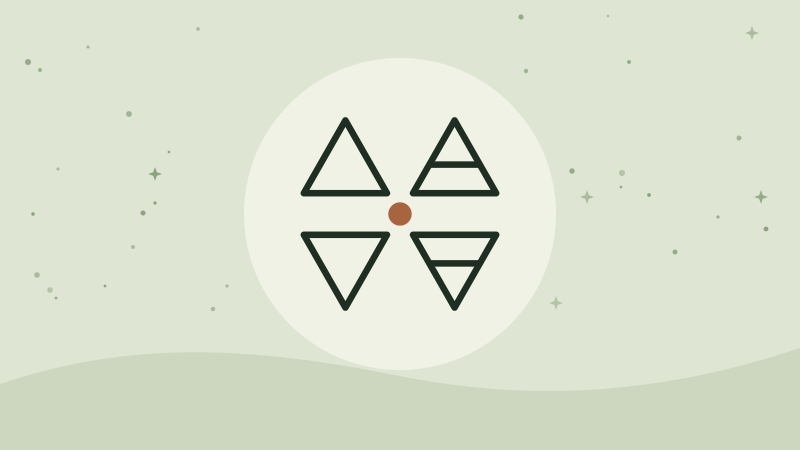
The Five Elements: Earth, Air, Fire, Water, and Spirit
Earth, Air, Fire, Water, and Spirit form the symbolic map of the Craft. Here are their directions, seasons, tools, and meanings.

The Wiccan Rede: An It Harm None, Do What Ye Will
An it harm none, do what ye will. Here is what the eight words mean, where they come from, and how they apply to real choices.
The Threefold Law: What the Rule of Three Really Means
The Threefold Law says that what you send out returns three times over. Here is where it comes from and how it is read.
Traditions and Paths: A Map of Wicca, Witchcraft, and Paganism
Gardnerian, Alexandrian, Dianic, eclectic, hedge, green, Druid, Heathen: a clear map of the main traditions and paths.

Covens and Solitaries: Practicing Together or Alone
What a coven is, why most witches practice alone, and how to look for a group safely.
Belief and practice
In most Pagan paths, what you do matters more than what you profess. A person who keeps the festivals, honors the land, and treats others well is a good Pagan, whatever theory they hold about the nature of the gods.
That is why this section is short and the practice section is long. Read these guides to understand why the rituals take the shape they do, then test the ideas in your own experience. You are allowed to change your mind as you go. Most of us have, more than once.